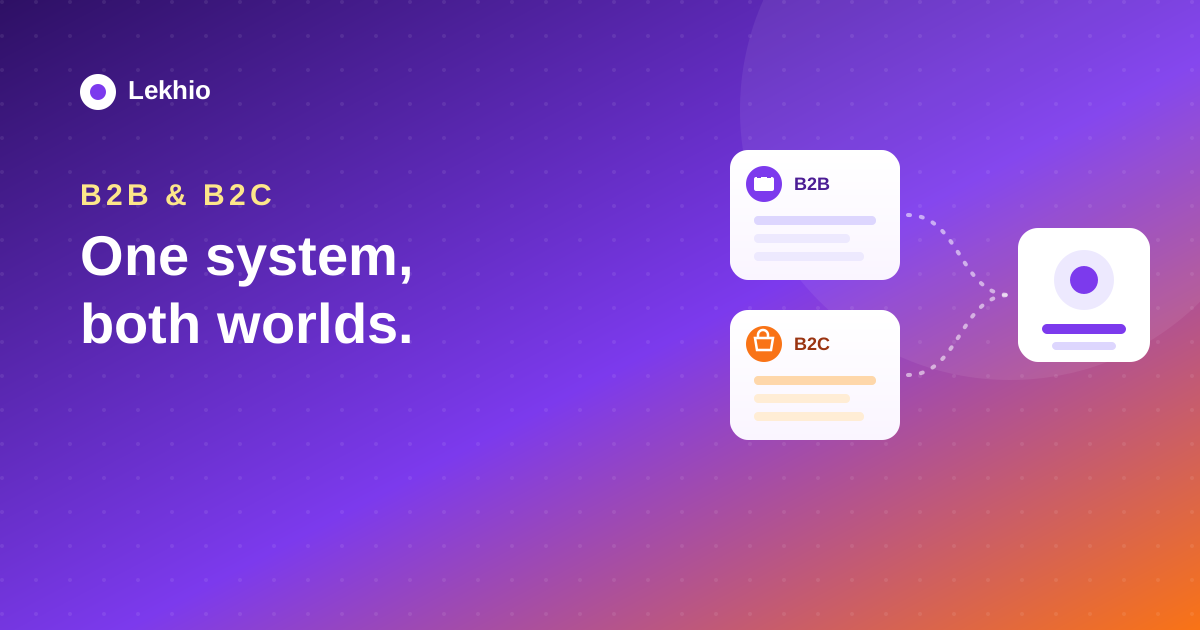
Plenty of businesses live in both worlds at once. You sell in bulk to other businesses on credit terms, and you sell to walk-in or online consumers one unit at a time. On the surface these feel like completely different operations — and most software forces you to treat them that way, with one tool for wholesale and another for retail.
That split is the problem. Two systems means two copies of your products, two views of your stock, and two sets of numbers that never quite agree.
The parts that differ
Yes, the front of the process is genuinely different:
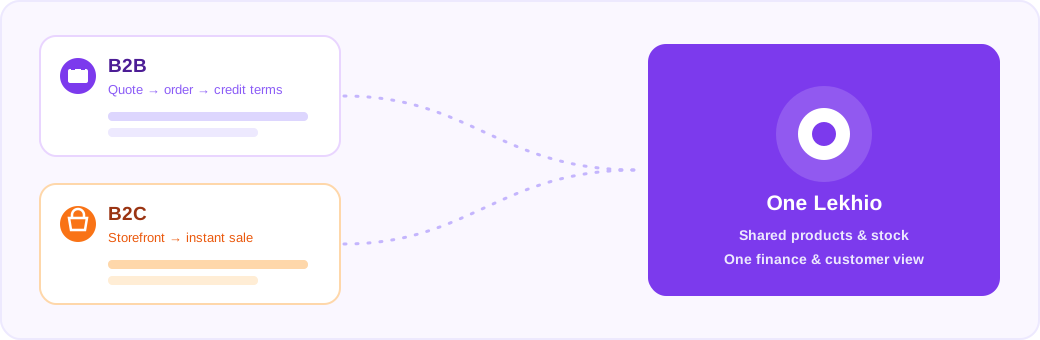
- B2B tends to run quote → order → invoice, often with negotiated pricing and payment on credit terms.
- B2C is usually an instant sale at a fixed price, paid on the spot.
Different rhythms, different paperwork. So far, so "two systems."
The parts that are identical
Here's the insight: everything behind the sale is the same. Both channels draw down the same stock. Both need the same products and prices to stay in sync. Both feed the same finances. The moment you split them, you're maintaining that shared foundation twice — and reconciling it forever.
One system, both channels
The better model is a single system that supports both sales motions on top of one shared core. A wholesale order and a retail sale both deduct from the same live stock. A new product is added once and available everywhere. Your revenue, margins and receivables cover the whole business, not half of it.
You still get the right tools for each channel — quotes and credit terms for B2B, fast fixed-price sales for B2C — but they sit on one foundation instead of two.
Lekhio is built for exactly this: B2B and B2C sales in one system, sharing the same products, inventory and finance — so you serve both kinds of customer without running (or reconciling) two separate tools.