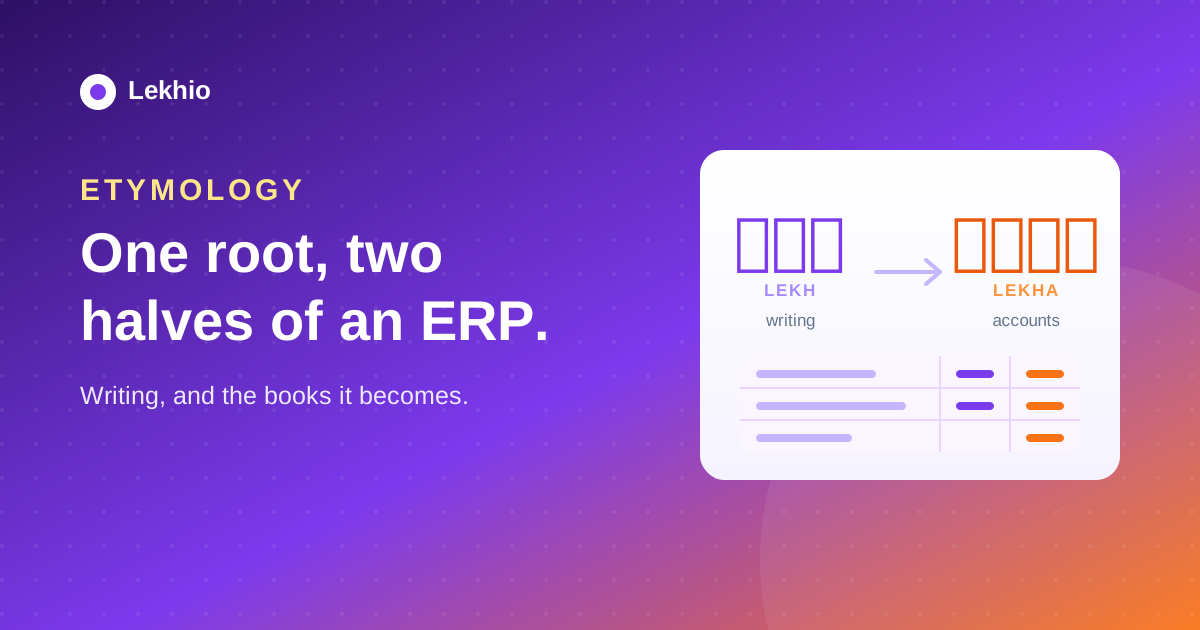
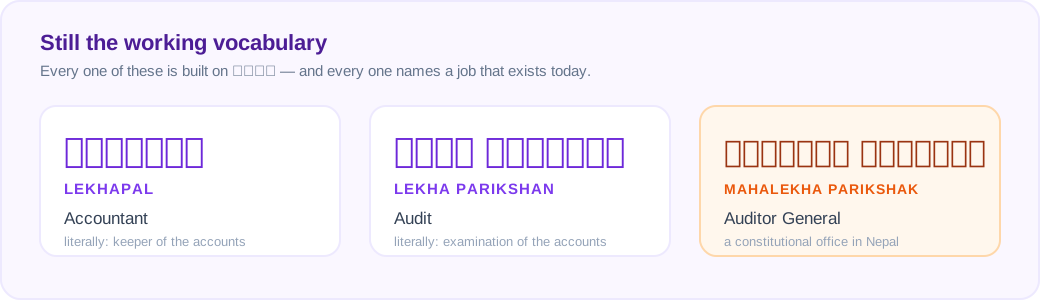
In Nepali and Hindi, the official word for an accountant is लेखापाल — lekhāpāl. Break it apart and it reads, literally, “keeper of the writing”. An audit is लेखा परीक्षण, an “examination of the writing”. Nepal’s Auditor General holds the constitutional office of महालेखा परीक्षक — the great examiner of the writing.
None of these words say “number”. They all say writing. That is not an accident of translation, and it is not poetic licence. It is what happens when you follow one Sanskrit root far enough.
The root: लिख् (likh), to scratch
The oldest sense is physical. लिख् means to scratch, to score, to inscribe — a stylus drawn across palm leaf or birch bark, a chisel against stone. Before writing was an abstraction it was an action performed on a surface. You took something blank and you marked it.
That physicality matters for everything that follows. The root does not mean “to compose” or “to record numbers”. It means to make a mark that was not there before.
लेख (lekh): that which has been written
From the root comes the noun. लेख is the thing produced — an article, a document, an inscription on a temple wall. It is ordinary, current vocabulary across Nepal and India; a newspaper opinion piece is a लेख.
Notice what the word refuses to do: it does not specify what kind of writing. A poem, a land record, a shopping list and a stone inscription are all equally लेख. The word is deliberately indifferent to content.
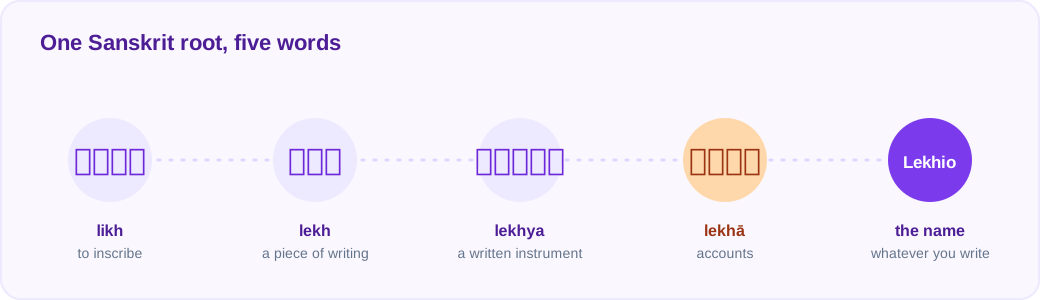
लेख्य (lekhya): the writing you are obliged to produce
Sanskrit has a grammatical form for obligation — the gerundive — and applied to this root it gives लेख्य: not merely written, but meant to be written. In classical Indian legal literature, lekhya is the technical term for a written instrument: a deed, a contract, a record that carries weight precisely because someone committed it to writing.
In the Yājñavalkya Smṛti’s treatment of legal procedure, documents sit alongside witnesses and possession as a means of proof. The written thing is evidence. Anyone who has ever needed to produce an invoice for a tax officer will recognise the idea immediately.
लेखा (lekhā): from a line to the ledger
Here is the turn. The same root also gives लेखा, which in Sanskrit means a line, a streak, a stroke — the mark itself rather than the message. And a page of accounts is, physically, a set of ruled lines with figures written between them.
Somewhere in that image the word crossed over. In modern Nepali and Hindi, लेखा does not mean “writing” at all. It means accounts. It is the formal, official register — a government accounts department is a लेखा विभाग, an accounts officer is a लेखा अधिकृत. (The everyday commercial word for an account book is खाता, but the professional and constitutional vocabulary is built on लेखा.)
Why writing became accounting almost everywhere
South Asia is not unusual here. Wherever archaeologists find the earliest surviving writing, they overwhelmingly find administration: inventories, rations, receipts, tallies of grain and cattle. The earliest large body of Mesopotamian cuneiform is not literature — it is bookkeeping.
Which suggests the direction of travel was never “first writing, then, much later, accounts”. Counting things you own and owe is one of the oldest reasons to make a mark on a surface at all. A language whose word for accounts is built from its word for writing is not being metaphorical. It is being historically accurate.
What this has to do with business software
Most business software draws a hard line the language does not. On one side sit the “write anything” tools — spreadsheets, notes, documents — flexible and yours, and structurally incapable of billing anyone. On the other sit the accounting and ERP systems: rigorous, auditable, and organised around modules somebody else decided you needed.
Teams end up straddling the gap, keeping the real operational detail in a spreadsheet and re-typing a sanitised version of it into the system of record. Every business that has outgrown its spreadsheets knows this tax; we wrote about the symptoms in 5 signs your business has outgrown spreadsheets.
The vocabulary suggests the split is artificial. लेख and लेखा are the same word wearing different clothes. Software that lets you write down whatever your business actually needs — and then treats that writing as the books, priced and taxed and auditable — is not doing two things. It is doing the one thing the root always described.
Which is why we called it Lekhio
Our ERP is named from लेख, with the software suffix -io as the only invention. It is a no-code system where you design your own pages and fields, and orders, invoices, stock and receivables attach themselves to the structure you defined. Write whatever you need; the books keep themselves.
The longer version of how the name was chosen — including the shortlist we threw away — is on the story behind the name. And if you would rather see how the subcontinent actually kept its books before any of this was software, read the bahi khata piece.
Lekhio is a no-code B2B & B2C ERP named after the word for writing — because that is what an ERP is. Start free and design your own.