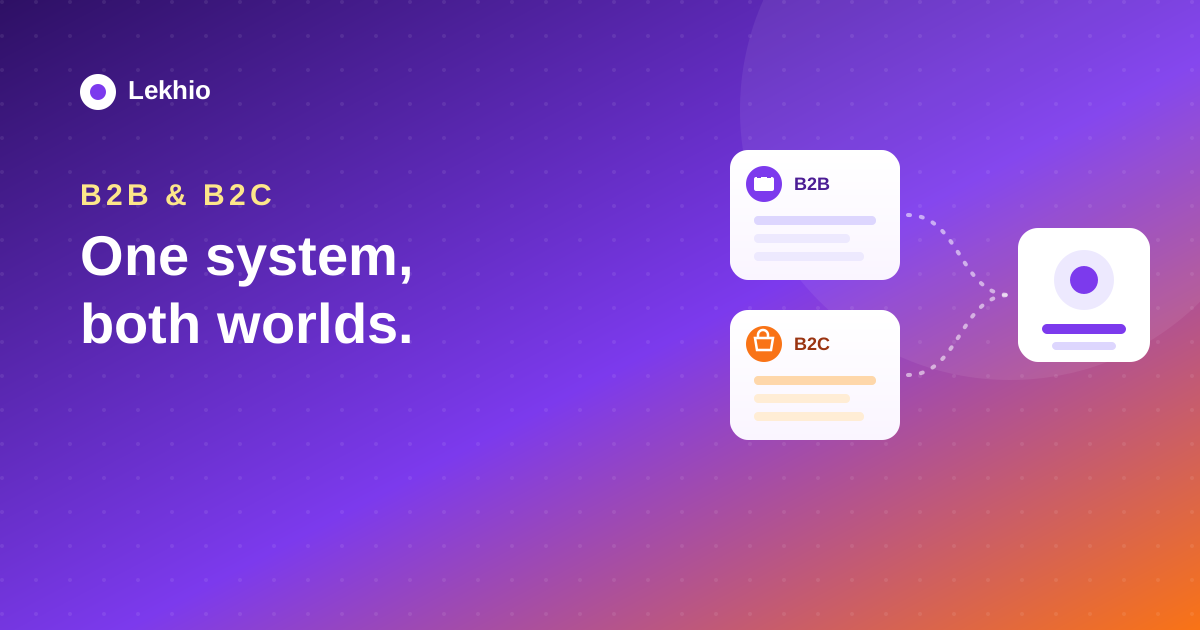
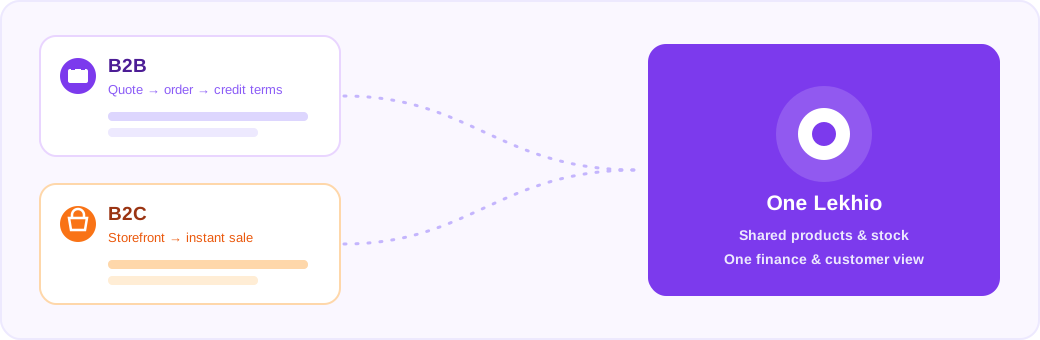
If you're weighing B2B vs B2C ERP software, here's the reassuring truth up front: underneath, they're more alike than different. Both manage the same products, the same inventory and the same finances. What differs is the front of the sale — how you quote, price and get paid.
The key differences
- Sales flow — B2B runs quote → order → invoice; B2C is an instant sale.
- Pricing — B2B pricing is often negotiated or tiered; B2C is fixed.
- Payment — B2B commonly sells on credit terms; B2C is paid on the spot.
- Volume — B2C is high-volume, many small transactions; B2B is fewer, larger deals.
Those differences are real, and they're why generic tools often feel wrong for one side or the other.
What they share
Both channels draw down the same stock, rely on the same product catalogue, and feed the same books. Split them across two systems and you maintain that foundation twice — and reconcile it forever. We go deeper on this in B2B and B2C in one system.
How to choose the best ERP for your business
If you sell only to businesses, prioritize a strong B2B ERP. If you sell only to consumers, prioritize a fast B2C ERP. But if you do both — or might soon — the best choice is one platform that runs both on a shared core. It's simpler, cheaper and always in sync.
Either way, favour no-code flexibility and fast setup over a long feature checklist. See how Lekhio approaches this on our features and solutions pages.
Lekhio runs B2B and B2C in one no-code ERP — shared products, inventory and finance, with the right tools for each channel. Start free, and never reconcile two systems again.